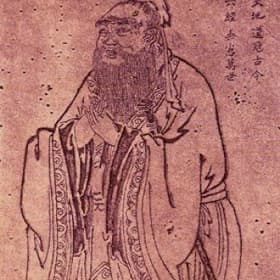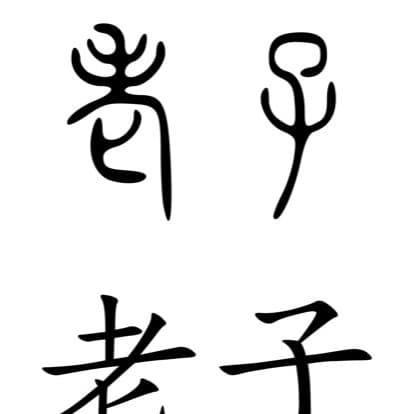
Lao Tzu
Eighty-one chapters, five thousand characters
Philosophy
Lao Tzu may not have existed. The Tao Te Ching is real enough — eighty-one short chapters that argue, in paradoxes, that yielding beats forcing and that the more you grasp the less you hold. It is the second most translated book in the world after the Bible, and no two translations agree.
Read Lao when pushing harder has stopped working and you cannot see another move.
I
The soft overcomes the hard; and the weak the strong.
Tao Te Ching, Ch. 36 · 500 BC
II
The farther that one goes out (from himself), the less he knows.
Tao Te Ching, Ch. 47 · 500 BC
III
The Tao that can be trodden is not the enduring and unchanging Tao.
Tao Te Ching, Ch. 1 · 500 BC
IV
The name that can be named is not the enduring and unchanging name.
Tao Te Ching, Ch. 1 · 500 BC
V
He who overcomes others is strong; he who overcomes himself is mighty.
Tao Te Ching, Ch. 33 · 500 BC
VI
When wealth and honours lead to arrogancy, this brings its evil on itself.
Tao Te Ching, Ch. 9 · 500 BC
VII
He who knows other men is discerning; he who knows himself is intelligent.
Tao Te Ching, Ch. 33 · 500 BC
VIII
He whose (desires) are few gets them; he whose (desires) are many goes astray.
Tao Te Ching, Ch. 22 · 500 BC
IX
He who is satisfied with his lot is rich; he who goes on acting with energy has a (firm) will.
Tao Te Ching, Ch. 33 · 500 BC
X
He who stands on his tiptoes does not stand firm; he who stretches his legs does not walk (easily).
Tao Te Ching, Ch. 24 · 500 BC
To know that unchanging rule is to be intelligent; not to know it leads to wild movements and evil issues.
Tao Te Ching, Ch. 16 · 500 BC
If we could renounce our sageness and discard our wisdom, it would be better for the people a hundredfold.
Tao Te Ching, Ch. 19 · 500 BC
When the work is done, and one's name is becoming distinguished, to withdraw into obscurity is the way of Heaven.
Tao Te Ching, Ch. 9 · 500 BC
Therefore the sage manages affairs without doing anything, and conveys his instructions without the use of speech.
Tao Te Ching, Ch. 2 · 500 BC
The reason why heaven and earth are able to endure and continue thus long is because they do not live of, or for, themselves.
Tao Te Ching, Ch. 7 · 500 BC