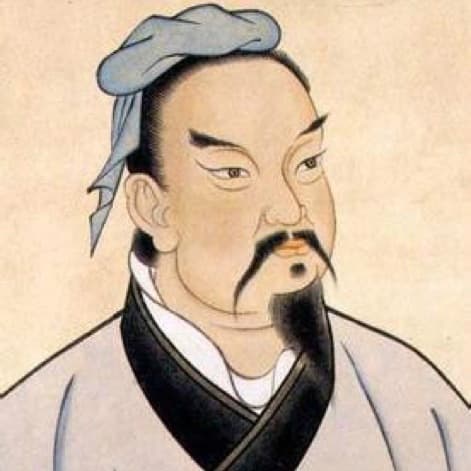
Sun Tzu
Win before the fighting starts
Leadership
The Art of War is twenty-five hundred years old and is still handed out at business schools, which would probably have amused its author. Sun Tzu's actual argument is the opposite of aggression: the best general never fights, because he has arranged things so that the outcome was decided beforehand. Everything else — terrain, deception, timing — follows from that.
The art of war is of vital importance to the State.
The Art of War, Ch. I: Laying Plans · 500 BC
In war, practise dissimulation, and you will succeed.
The Art of War, Ch. VII: Manoeuvering · 500 BC
Soldiers when in desperate straits lose the sense of fear.
The Art of War, Ch. XI: The Nine Situations · 500 BC
Attack him where he is unprepared, appear where you are not expected.
The Art of War, Ch. I: Laying Plans · 500 BC
The rule is, not to besiege walled cities if it can possibly be avoided.
The Art of War, Ch. III: Attack by Stratagem · 500 BC
There is no instance of a country having benefited from prolonged warfare.
The Art of War, Ch. II: Waging War · 500 BC
Knowledge of the enemy’s dispositions can only be obtained from other men.
The Art of War, Ch. XIII: The Use of Spies · 500 BC
Anger may in time change to gladness; vexation may be succeeded by content.
The Art of War, Ch. XII: The Attack by Fire · 500 BC
The onset of troops is like the rush of a torrent which will even roll stones along in its course.
The Art of War, Ch. V: Energy · 500 BC
What the ancients called a clever fighter is one who not only wins, but excels in winning with ease.
The Art of War, Ch. IV: Tactical Dispositions · 500 BC
The onrush of a conquering force is like the bursting of pent-up waters into a chasm a thousand fathoms deep.
The Art of War, Ch. IV: Tactical Dispositions · 500 BC
The quality of decision is like the well-timed swoop of a falcon which enables it to strike and destroy its victim.
The Art of War, Ch. V: Energy · 500 BC
All men can see the tactics whereby I conquer, but what none can see is the strategy out of which victory is evolved.
The Art of War, Ch. VI: Weak Points and Strong · 500 BC
He who can modify his tactics in relation to his opponent and thereby succeed in winning, may be called a heaven-born captain.
The Art of War, Ch. VI: Weak Points and Strong · 500 BC
No ruler should put troops into the field merely to gratify his own spleen; no general should fight a battle simply out of pique.
The Art of War, Ch. XII: The Attack by Fire · 500 BC
Read when you are about to enter a fight you have not yet worked out how to win