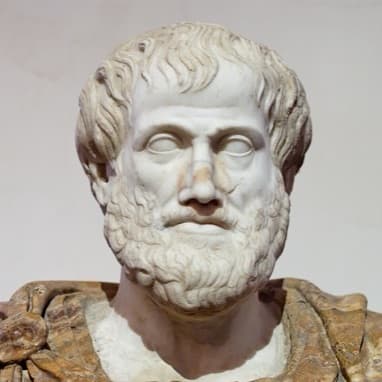
Aristotle
The man who tried to classify everything
Philosophy
Aristotle studied under Plato for twenty years, disagreed with him about almost everything, then tutored Alexander the Great. Where his teacher looked upward at ideal forms, he looked down at animals, constitutions, tragedies and weather, and tried to sort them. His ethics rest on a single unfashionable idea: virtue is a habit, and you become brave by doing brave things.
Read when you want a practical answer to how a person should live, not an inspiring one
Nothing is so difficult to subdue as injustice in arms.
Politics, Book I · 350 BC
Mothers have greater strength of affection than fathers.
Nicomachean Ethics, Book VIII · 340 BC
Human nature is more disposed to take than to forgo revenge.
Nicomachean Ethics, Book IV · 340 BC
He who first founded civil society was the cause of the greatest good.
Politics, Book I · 350 BC
Falsehood is in itself low and blameable, while truth is noble and praiseworthy.
Nicomachean Ethics, Book IV · 340 BC
In poverty moreover and all other adversities men think friends to be their only refuge.
Nicomachean Ethics, Book VIII · 340 BC
Virtue must be a state whereby Man comes to be good and whereby he will perform well his proper work.
Nicomachean Ethics, Book II · 340 BC
Virtue is a mean state; but in reference to the chief good and to excellence it is the highest state possible.
Nicomachean Ethics, Book II · 340 BC
In all matters the mean is praiseworthy, while the extremes are neither right nor worthy of praise but of blame.
Nicomachean Ethics, Book II · 340 BC
Happiness is manifestly something final and self-sufficient, being the end of all things which are and may be done.
Nicomachean Ethics, Book I · 340 BC
The gift of speech also evidently proves that man is a more social animal than the bees, or any of the herding cattle.
Politics, Book I · 350 BC
Friendship seems to be the bond of Social Communities, and legislators seem to be more anxious to secure it than Justice even.
Nicomachean Ethics, Book VIII · 340 BC
Could a man be found who takes no pleasure in anything and to whom all things are alike, he would be far from being human at all.
Nicomachean Ethics, Book III · 340 BC
Every bad man is ignorant what he ought to do and what to leave undone, and by reason of such error men become unjust and wholly evil.
Nicomachean Ethics, Book III · 340 BC
The Vain are foolish and self-ignorant, and that palpably: because they attempt honourable things, as though they were worthy, and then they are detected.
Nicomachean Ethics, Book IV · 340 BC