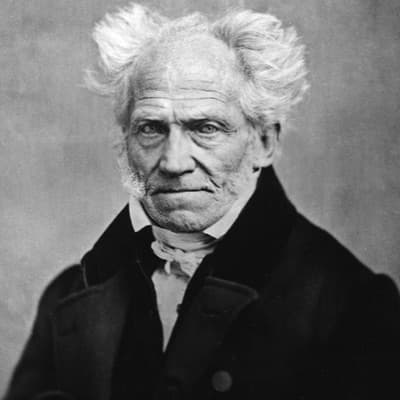
Arthur Schopenhauer
The pessimist who was very good company
Philosophy
Schopenhauer held that the world is driven by a blind striving will that can never be satisfied, and then wrote about it with more wit than most optimists manage. He spent decades ignored while Hegel filled lecture halls, which he never got over. His essays on health, solitude and what actually makes a person happy are the least gloomy thing in nineteenth-century philosophy.
Read Arthur when you suspect the thing you are chasing will not deliver what it promises.
I
Nine-tenths of our happiness depends upon health alone.
The Wisdom of Life, Ch. II · 1851
II
Himself is the source of the best and most a man can be or achieve.
The Wisdom of Life, Ch. II · 1851
III
Nothing contributes so little to cheerfulness as riches, or so much, as health.
The Wisdom of Life, Ch. II · 1851
IV
No man ought to expect much from others, or, in general, from the external world.
The Wisdom of Life, Ch. II · 1851
V
It is quite certain that what a man is contributes much more to his happiness than what he has.
The Wisdom of Life, Ch. I · 1851
VI
Wife and children I have not reckoned amongst a man's possessions: he is rather in their possession.
The Wisdom of Life, Ch. III · 1851
VII
The man who is cheerful and merry has always a good reason for being so,--the fact, namely, that he is so.
The Wisdom of Life, Ch. II · 1851
VIII
Riches, one may say, are like sea-water; the more you drink the thirstier you become; and the same is true of fame.
The Wisdom of Life, Ch. III · 1851
IX
The more a man has in himself, the less he will want from other people,--the less, indeed, other people can be to him.
The Wisdom of Life, Ch. II · 1851
X
Health outweighs all other blessings so much that one may really say that a healthy beggar is happier than an ailing king.
The Wisdom of Life, Ch. I · 1851
What a man is and has in himself,--in a word personality, with all it entails, is the only immediate and direct factor in his happiness and welfare.
The Wisdom of Life, Ch. II · 1851
What one human being can be to another is not a very great deal: in the end every one stands alone, and the important thing is who it is that stands alone.
The Wisdom of Life, Ch. II · 1851
There is not much to be got anywhere in the world. It is filled with misery and pain; and if a man escapes these, boredom lies in wait for him at every corner.
The Wisdom of Life, Ch. II · 1851
Nothing is so good a protection against such misery as inward wealth, the wealth of the mind, because the greater it grows, the less room it leaves for boredom.
The Wisdom of Life, Ch. II · 1851
A good, temperate, gentle character can be happy in needy circumstances, whilst a covetous, envious and malicious man, even if he be the richest in the world, goes miserable.
The Wisdom of Life, Ch. I · 1851