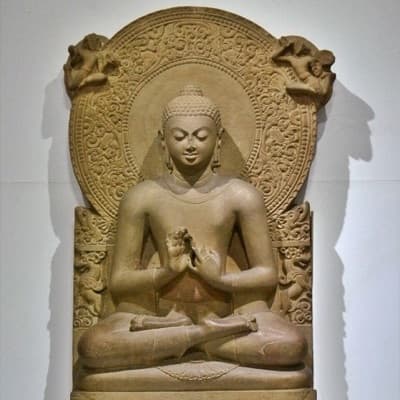
Buddha
A diagnosis, not a religion
Personal Growth
Siddhartha Gautama left a palace at twenty-nine, spent six years testing every ascetic practice available, and concluded that both extremes were a waste of time. What he taught afterwards reads less like theology than like a physician's report: here is the suffering, here is its cause, here is the fact that it can stop. These lines come from the Dhammapada, the oldest collection of his sayings.
Read when the problem is not your circumstances but the wanting itself
Hatred does not cease by hatred at any time: hatred ceases by love, this is an old rule.
Dhammapada, Chapter 1: The Twin Verses, verse 5
As a solid rock is not shaken by the wind, wise people falter not amidst blame and praise.
Dhammapada, Chapter 6: The Wise Man (Pandita), verse 81
As rain breaks through an ill-thatched house, passion will break through an unreflecting mind.
Dhammapada, Chapter 1: The Twin Verses, verse 13
They who know truth in truth, and untruth in untruth, arrive at truth, and follow true desires.
Dhammapada, Chapter 1: The Twin Verses, verse 12
Fools follow after vanity, men of evil wisdom. The wise man keeps earnestness as his best jewel.
Dhammapada, Chapter 2: On Earnestness, verse 26
Before long, alas! this body will lie on the earth, despised, without understanding, like a useless log.
Dhammapada, Chapter 3: Thought, verse 41
They who imagine truth in untruth, and see untruth in truth, never arrive at truth, but follow vain desires.
Dhammapada, Chapter 1: The Twin Verses, verse 11
As rain does not break through a well-thatched house, passion will not break through a well-reflecting mind.
Dhammapada, Chapter 1: The Twin Verses, verse 14
Whatever a hater may do to a hater, or an enemy to an enemy, a wrongly-directed mind will do us greater mischief.
Dhammapada, Chapter 3: Thought, verse 42
The world does not know that we must all come to an end here;—but those who know it, their quarrels cease at once.
Dhammapada, Chapter 1: The Twin Verses, verse 6
The fool who knows his foolishness, is wise at least so far. But a fool who thinks himself wise, he is called a fool indeed.
Dhammapada, Chapter 5: The Fool, verse 63
All men tremble at punishment, all men fear death; remember that you are like unto them, and do not kill, nor cause slaughter.
Dhammapada, Chapter 10: Punishment, verse 129
As the bee collects nectar and departs without injuring the flower, or its colour or scent, so let a sage dwell in his village.
Dhammapada, Chapter 4: Flowers, verse 49
Do not have evil-doers for friends, do not have low people for friends: have virtuous people for friends, have for friends the best of men.
Dhammapada, Chapter 6: The Wise Man (Pandita), verse 78
An evil deed is better left undone, for a man repents of it afterwards; a good deed is better done, for having done it, one does not repent.
Dhammapada, Chapter 22: The Downward Course, verse 314